
If you're considering installing car window tint, you've probably come across a bunch of technical terms that might seem a bit confusing – like “TSER”, “VLT” and “IRER”.
Choosing the right car window film isn't just about picking the darkest tint or the coolest colour. It's about understanding the specific benefits each film offers and how it aligns with your needs. Whether you're looking to keep your car cooler, protect your interior from UV damage, or reduce glare while driving, knowing these terms will help you make an informed decision.
Why you need to know these terms
Understanding these technical terms can help you get the most comfortable driving experience. The right car tint reduces sun glare, heat, and UV exposure while keeping your vehicle cooler, lessening the need for air conditioning, and protecting your car's interior from fading and damage. The shade of tint you select also allows you to choose the level of privacy you desire. Plus, being informed means you can have a more meaningful conversation with your installer, ensuring you get exactly what you need when you're ready for your window film installation.
Keep reading and we’ll provide you with a comprehensive breakdown about car window tints. Let's dive in!

Visible Light Transmitted (VLT)
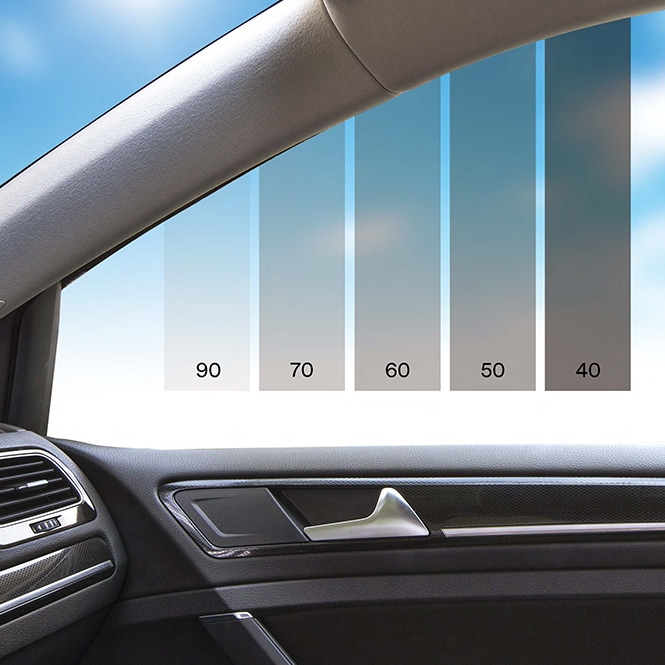
This tells you how much visible light passes through the window film. A higher VLT percentage means more light gets through, resulting in a lighter film, while a lower VLT percentage allows less light to pass, creating a darker appearance.
It's important to note that a high VLT does not necessarily mean the heat rejection is better. In fact, some window films, like 3M™ Automotive Window Film Crystalline™ Series, can reject more heat than many darker films without noticeably changing the appearance of your car. When selecting a tint VLT level, consider both your style preferences and the local regulations in your area to ensure compliance with laws as well as your own satisfaction.

Ultraviolet Rejection (UV)
UV is all about protecting you and your car's interior from harmful UV rays. A high percentage of UV rejection means the window film blocks more UV light, which helps prevent skin damage and keeps your car's upholstery from fading and deteriorating. Look for films with high UV rejection to keep your ride looking fresh. When choosing car window tint films, consider those with the Skin Cancer Foundation's Seal of Recommendation, which ensures the film blocks 99% or more of UVA and UVB radiation. Trusted by consumers for nearly 40 years, this seal indicates safe and effective sun protection. Notably, 3M™ Automotive Window Films Crystalline™ Series and, 3M™ Automotive Window Films Ceramic IR Series are among the products that have the Skin Cancer Foundation Seal of Recommendation.

Heat rejection properties
Total Solar Energy Rejection (TSER):
TSER is a measure of how much solar energy (heat) is blocked by the window film. The higher the TSER percentage, the more heat is kept out of your car. This means a cooler ride and less reliance on your air conditioning. So, if you live in a hot climate, look for a film with a high TSER tint value.
Infrared Rejection (IRR):
This measures how much infrared light (which contributes to heat) is blocked by the film at a specific IR range. The higher the IRR tint percentage, the more heat is kept out. This is especially important if you want to keep your car cool and comfortable during those sunny days.
Infrared Energy Rejection (IRER):
Total Infrared Energy Rejection (IRER) accounts for infrared light blocked across the spectrum from 780-2500 nm, including the heat that might be reradiated inside the vehicle (>2500 nm). IRER is a broader measure of how much infrared energy is blocked over a wider range of wavelengths.

TSER, IRR or IRER – which heat rejection indicator is more important?
When evaluating window films, understanding the differences between Infrared Rejection (IRR) and Total Infrared Energy Rejection (IRER) is crucial.
IRR indicates how effectively a film blocks specific infrared light, aiding in keeping your car's interior cooler and reducing the need for air conditioning.
However, for comprehensive heat rejection, consider IRER, which measures the film's efficiency in blocking a broader range of infrared and reradiated heat, providing better overall cooling.
Additionally, TSER provides a holistic view of the film's performance against the entire range of solar energy.
For a full picture of a film's heat-reduction performance, pair IRR and IRER with Total Solar Energy Rejection (TSER) to ensure your choice maximises comfort and efficiency.

Glare Reduction
Glare Reduction is the percentage by which visible light is reduced by the window film. This helps to reduce the blinding glare from the sun or headlights, making your driving experience safer and more comfortable. If you often find yourself squinting while driving, a car tinting film with good glare reduction can be a game-changer.
Choosing the right film
-
When choosing a window film, consider your needs and preferences. Do you want maximum heat rejection? Go for a high TSER and IRER. Want to keep your car's interior looking new? Look for high UV rejection. Need to reduce glare? Check the glare reduction percentage. And always make sure to comply with local regulations regarding VLT levels.
Window films are a great investment for your car
By understanding these key terms, you can make an informed decision and choose the right film for your needs.
If you have any more questions or need further assistance, feel free to get in touch with us.
